

What Is a Tummy Tuck?
A tummy tuck (abdominoplasty) is a body-contouring procedure that removes excess skin and fat from the abdomen and tightens the underlying muscles to create a smoother, firmer midsection.
At Halcyon Hospital, every tummy tuck plan is individually designed around your body shape, skin quality, medical history and aesthetic goals.
It is often chosen after pregnancy or major weight loss, when diet and exercise can no longer tighten loose skin or separated abdominal muscles.
- Removes excess skin and fat
- Done under General Anesthesia
- Procedure time: 2-5Hrs
- Hospital stay: 2 Days
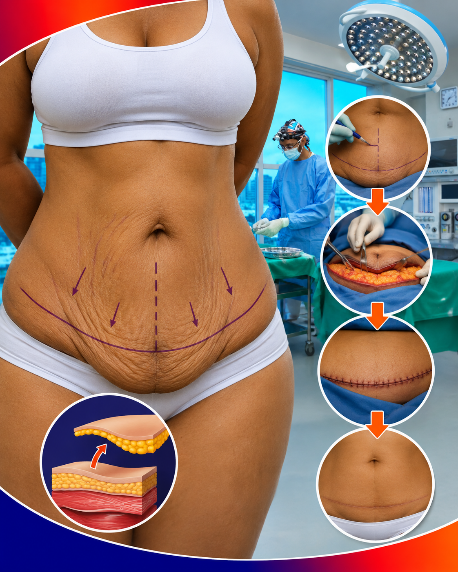
The procedure can provide two complementary benefits:
- Skin and fat removal: excess skin and fat below the navel and across the lower abdomen are removed.
- Muscle tightening: stretched or separated abdominal muscles (diastasis recti) are repaired to restore a firmer, flatter profile.
Table of Contents
Patient Testimonials
Real results from real patients at Halcyon Hospital. See the transformations our plastic surgery team has achieved.
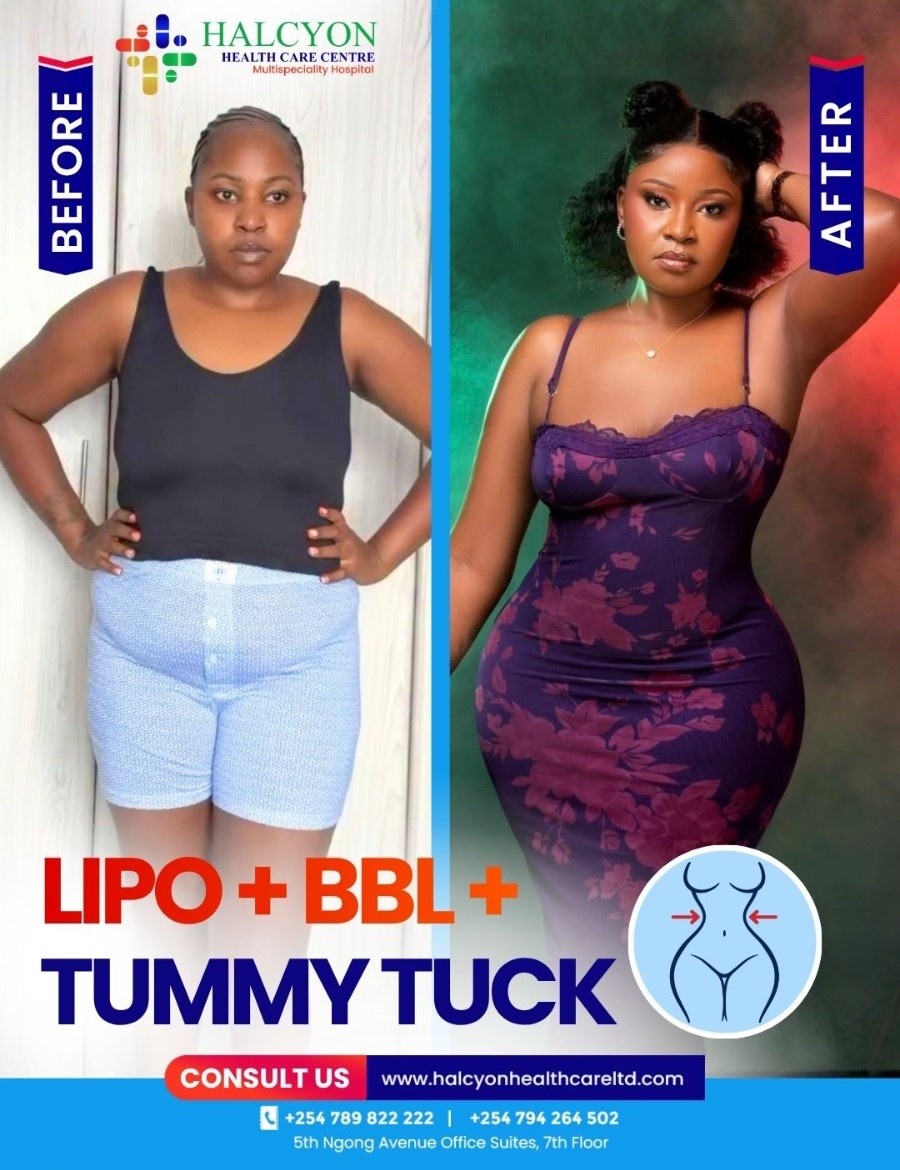
Verified patient result at Halcyon Hospital
Watch real patient stories & transformations
HOW TUMMY TUCK SURGERY WORKS
Consultation & Body Assessment
Your surgeon evaluates your abdominal skin, fat distribution, muscle separation, medical history, previous surgery, weight stability and goals.
Anaesthesia & Incision
The procedure is done under anaesthesia. A horizontal incision is made low on the abdomen, typically between the hip bones. The length depends on how much skin needs to be removed.
Muscle Repair
Separated or weakened abdominal muscles are brought together and stitched into a tighter position, restoring a firmer abdominal wall.
Skin & Fat Removal
The skin is lifted and excess skin and fat are removed. The remaining skin is redraped smoothly over the abdomen.
Closure & Navel Repositioning
The navel is repositioned to a natural-looking place, the incisions are closed, and drains or dressings are placed where needed.
Recovery
You receive individualised instructions on movement, posture, wound care, medication, compression garments and follow-up.
Your surgeon evaluates your abdominal skin, fat distribution, muscle separation, medical history, previous surgery, weight stability and goals.
The procedure is done under anaesthesia. A horizontal incision is made low on the abdomen, typically between the hip bones. The length depends on how much skin needs to be removed.
Separated or weakened abdominal muscles are brought together and stitched into a tighter position, restoring a firmer abdominal wall.
The skin is lifted and excess skin and fat are removed. The remaining skin is redraped smoothly over the abdomen.
The navel is repositioned to a natural-looking place, the incisions are closed, and drains or dressings are placed where needed.
You receive individualised instructions on movement, posture, wound care, medication, compression garments and follow-up.
Benefits, Disadvantages & Risks of Tummy Tuck
Benefits
- Flatter, firmer abdomen
- Repairs separated abdominal muscles
- Removes loose skin that diet and exercise cannot
- Improves how clothes fit
- Long-lasting results with stable weight
Disadvantages
- Permanent scar across the lower abdomen
- Several weeks of limited activity and lifting
- Compression garment needed for a period after surgery
- Not suitable if you plan future pregnancies
- Significant weight changes can affect the result
Possible Risks
- Fluid collecting under the skin (seroma) (about 5–10%)
- Delayed wound healing (about 2–5%)
- Scarring that is wider or more visible than expected
- Temporary numbness or changes in sensation
- Uneven or asymmetrical results
Complications
- Infection (about 1–3%)
- Bleeding or blood collection under the skin (hematoma) (about 1–3%)
- Blood clots in the legs or lungs (<1%)
- Tissue damage at the wound edges, more likely in smokers
Is a Tummy Tuck Right for You?
A consultation is essential because suitability varies from person to person. You may be considered if you:
- Have loose or sagging abdominal skin.
- Have a bulge that persists despite diet and exercise.
- Have separated abdominal muscles after pregnancy.
- Are in generally good health.
- Have a stable weight.
- Do not smoke, or are willing to stop before and after surgery.
- Have realistic expectations and understand the recovery process.
If a tummy tuck is not the right fit, your surgeon can discuss alternatives such as liposuction or a staged approach.
Tummy Tuck After Significant Weight Loss
After major weight loss, whether through bariatric surgery, non-surgical weight loss or lifestyle changes, many people are left with loose, hanging abdominal skin that does not tighten on its own. For suitable patients, a tummy tuck can help address this once weight has stabilised.
Recovery & Results
Recovery
Recovery varies from patient to patient. Early recovery may involve swelling, bruising, tightness and temporary numbness across the abdomen. Your surgical team will give individualised instructions on posture, movement, lifting, compression garments, wound care, work, exercise and follow-up.
Results
The appearance right after surgery is not the final result. Swelling takes time to settle, and the scar continues to mature and fade over many months. Results depend on anatomy, skin quality, surgical technique, healing, weight stability and aftercare.
Tummy Tuck vs Liposuction
| Feature | Tummy Tuck | Liposuction |
|---|---|---|
| Removes excess skin | Yes | No |
| Removes fat | Yes | Yes |
| Tightens abdominal muscles | Yes | No |
| Scar | Low horizontal scar | Small puncture marks |
| Best for | Loose skin, muscle separation | Pockets of fat with good skin tone |
| Recovery | Longer | Shorter |
| Suitable for everyone | No | No |
Tummy Tuck and Other Body Contouring
A tummy tuck can be combined with liposuction to refine the waist and flanks, or planned alongside other body-contouring procedures where appropriate. Your surgeon will advise whether combining procedures is safe and sensible for you.
Consult with Our Plastic Surgery Specialists
Book a personal, comprehensive consultation at Halcyon Hospital Nairobi to assess your candidacy and a tailored body contouring plan.
FAQs
A tummy tuck removes excess skin and fat from the abdomen and tightens the abdominal muscles for a flatter, firmer midsection.
No. Liposuction removes fat only. A tummy tuck also removes loose skin and repairs separated muscles.
It removes some tissue, but it is not a weight-loss procedure. It is best done once you are at a stable, healthy weight.
Often yes. It is generally recommended once you have finished having children, as future pregnancies can affect the result.
Potentially, yes. Your surgeon will assess your weight stability, nutritional status and the amount of excess skin.
Yes. The scar is placed low on the abdomen so it can usually be hidden by underwear or swimwear, and it fades over time.
All surgery carries risks, including infection, bleeding, fluid collection and blood clots. Your surgeon will explain these and the safety measures taken during consultation.
Results can be long-lasting if your weight stays stable, though pregnancy and significant weight changes can alter them.
Often yes, for example with liposuction. Your surgeon will advise what is safe for you.
Cost depends on the extent of surgery, anaesthesia, facility charges, postoperative care and individual needs. A personalised quotation is provided after assessment.