

What Is Lipo 360?
Sculpt Your Midsection. Refine Your Shape.
Lipo 360, also called 360-degree liposuction, is a body-contouring procedure that removes unwanted fat from around the midsection. It commonly treats the abdomen, waist, flanks (love handles) and back to create a slimmer, more defined and balanced waistline.
The surgeon makes small incisions and passes a thin tube called a cannula beneath the skin to loosen and suction out selected fat. The procedure focuses on fat beneath the skin; it does not remove fat surrounding internal organs, reliably tighten significant loose skin or repair separated abdominal muscles.
Lipo 360 is intended to improve body shape, not to treat obesity or replace healthy weight management.
- Treatment areas: Abdomen, waist, flanks and back
- Anaesthesia: Usually general anaesthesia
- Duration: Approximately 2–4 hours
- Hospital stay: 1–2 Days
- Recovery: 1–2 weeks for light activities
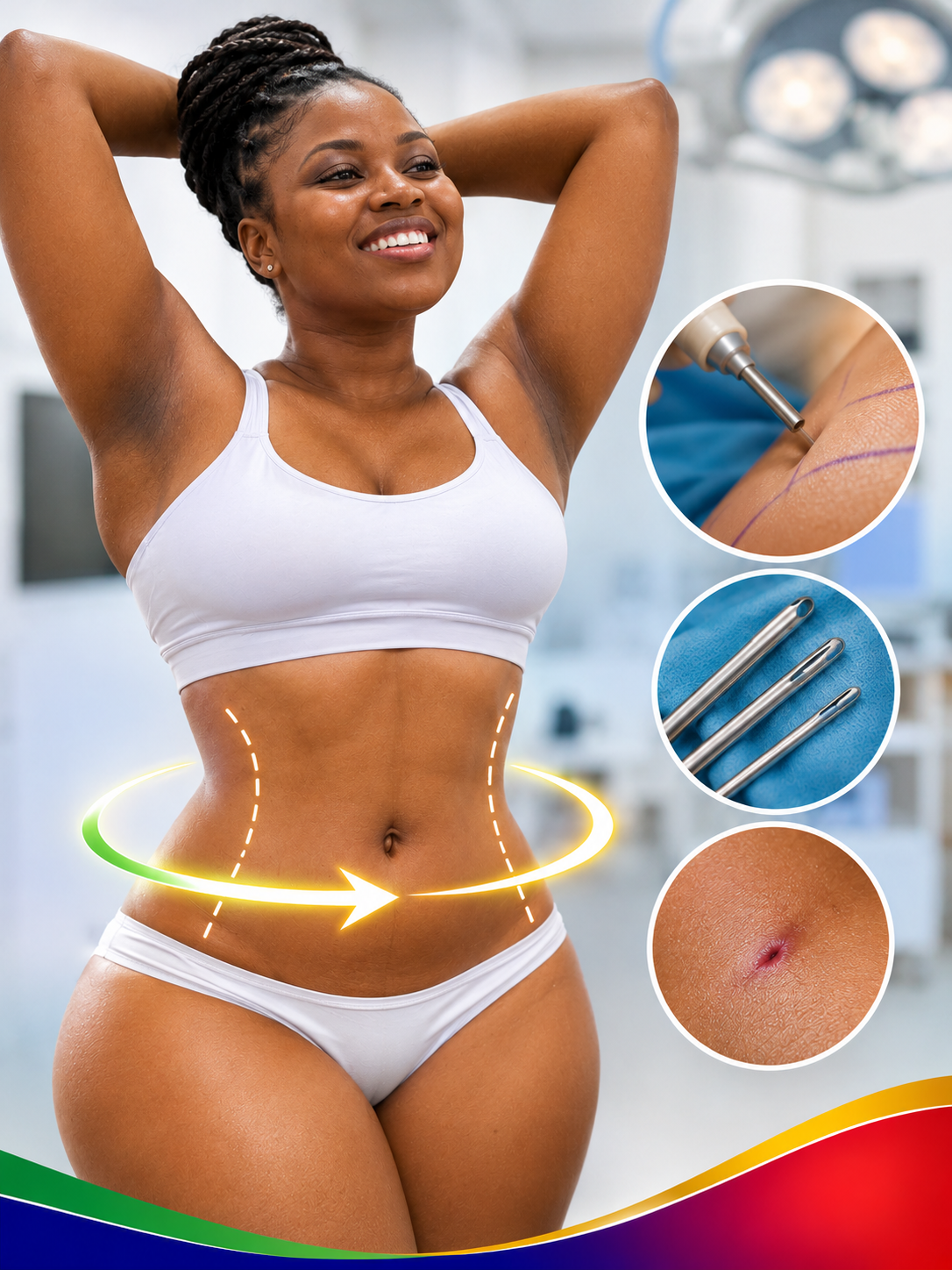
Table of Contents
Patient Testimonials
Real results from real patients at Halcyon Hospital. See the transformations our plastic surgery team has achieved.
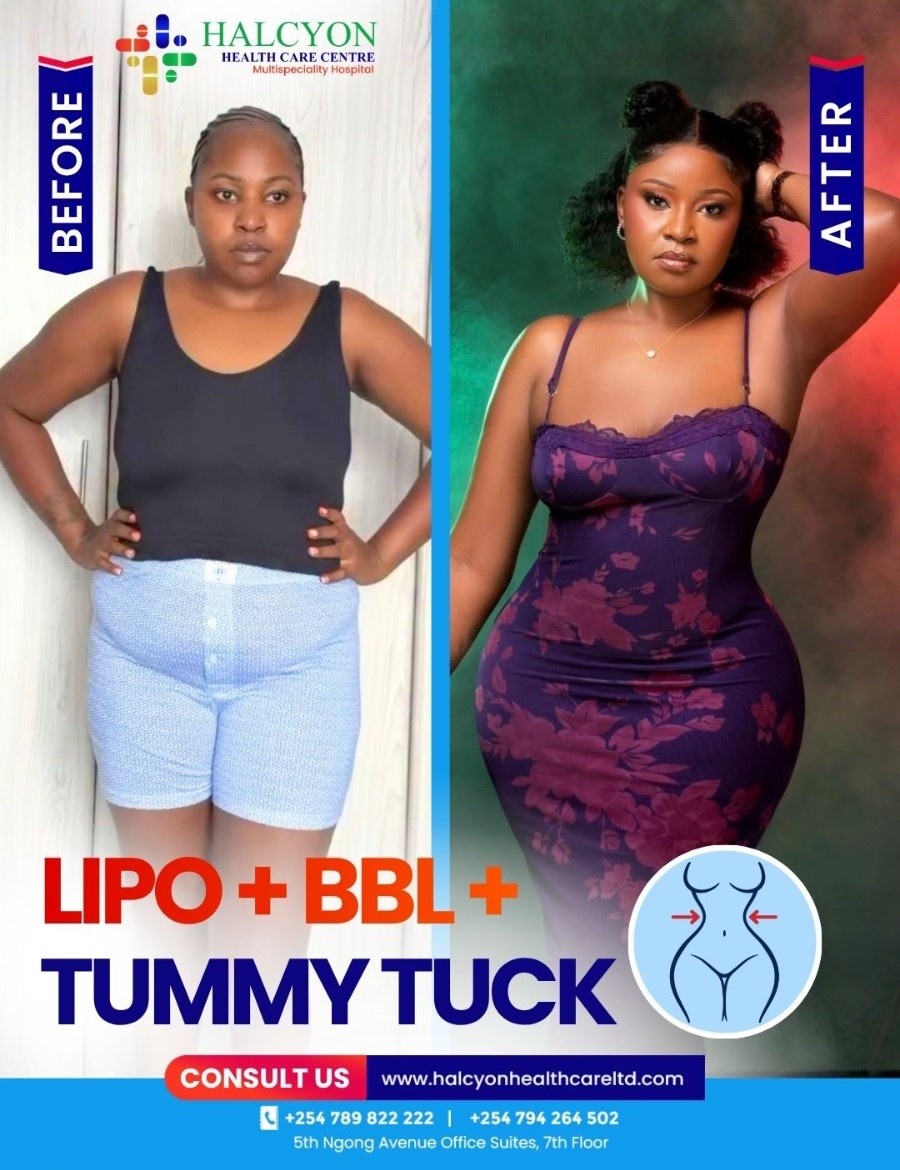
Verified patient result at Halcyon Hospital
Watch real patient stories & transformations
HOW LIPO-360 SURGERY WORKS
1 Step 1 — Consultation
The surgeon reviews your health, examines fat distribution and skin quality, and discusses realistic goals.
2 Step 2 — Preparation
Medical checks and anaesthesia assessment are completed. You receive instructions about fasting, medicines and smoking.
3 Step 3 — Surgery
The surgeon marks the treatment areas, administers anaesthesia, makes small incisions and removes selected fat with a cannula.
4 Step 4 — Recovery Room
The team monitors you as you wake from anaesthesia and checks for early concerns.
5 Step 5 — Aftercare
You receive instructions on compression garments, wound care, walking, medicines and follow-up visits.
Benefits, Disadvantages & Risks of Lipo 360
Benefits of Lipo 360
- Treats the front, sides and back of the midsection as one body-contouring plan.
- Can reduce stubborn fat pockets around the abdomen, waist and back.
- May create a more defined waistline and smoother body proportions.
- Uses small access incisions, which usually leave small scars.
- Fat cells removed are permanently removed, although weight gain can still change the result.
Disadvantages & Limitations
- It is surgery and involves anaesthesia, recovery time and possible complications.
- It is not a major weight-loss procedure and does not treat visceral fat around internal organs.
- It does not remove significant loose skin or repair separated abdominal muscles.
- Swelling can hide the result for weeks or months.
- Uneven contours, asymmetry or the need for a revision procedure are possible.
- A stable weight and healthy lifestyle help maintain the result.
Possible Complications
- Contour irregularities: 2.35%
- Skin darkening (hyperpigmentation): 1.49%
- Fluid accumulation (seroma): 0.65%
- Blood collection (haematoma): 0.27%
Possible Risks
- Anaesthesia complications (serious): about 0.01–0.1%
- Deep vein thrombosis (DVT): about 0.1–0.5%
- Pulmonary embolism (PE): about 0.01–0.1%
- Fat embolism: under 0.1%
- Internal organ injury: about 0.001–0.01%
- Severe bleeding needing a blood transfusion: about 0.1–1%
- Severe infection (for example sepsis or deep tissue infection): under 0.1%
Lipo 360 Compared with a Tummy Tuck
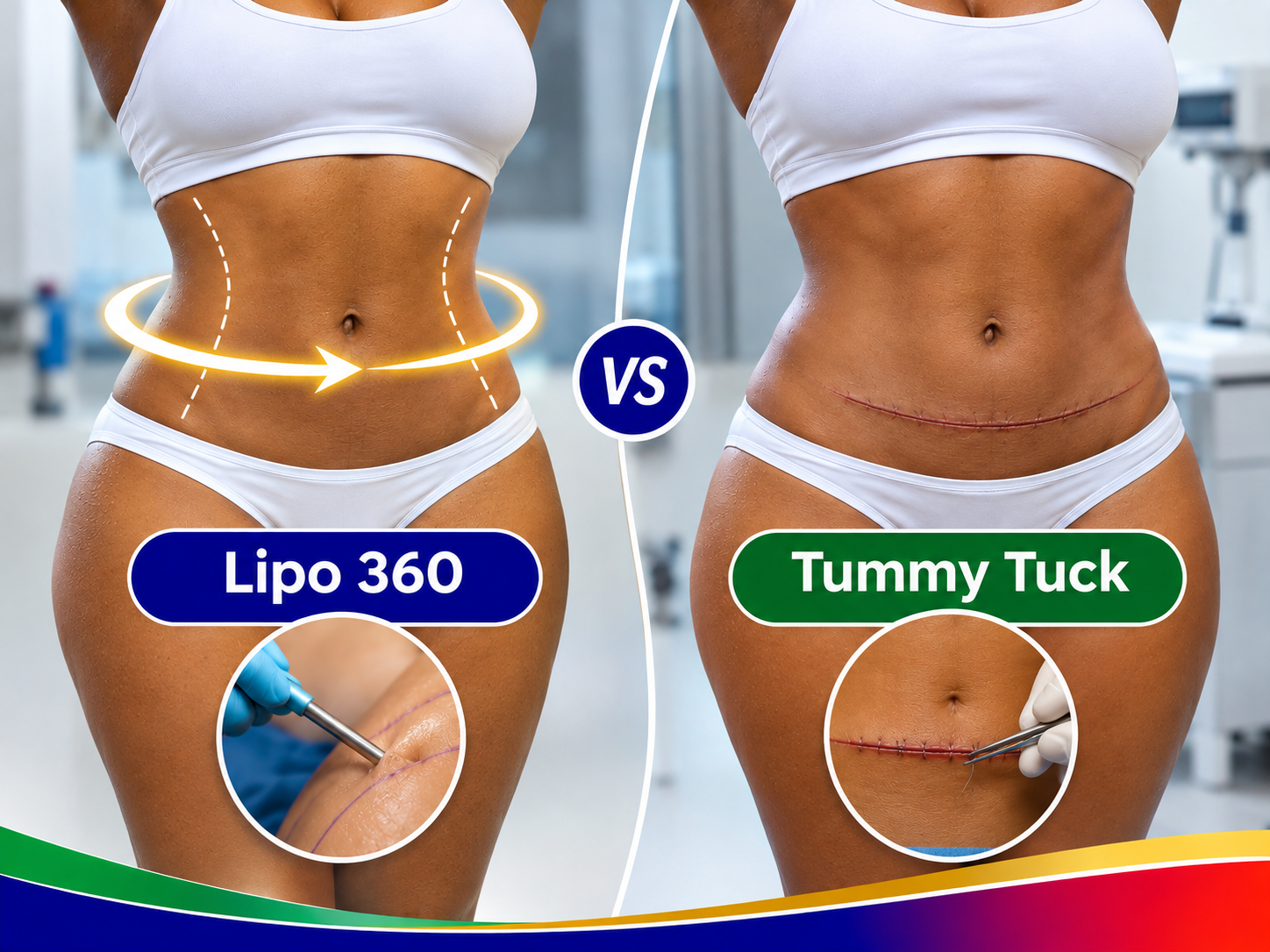
These procedures address different concerns. Lipo 360 mainly removes fat; a tummy tuck (abdominoplasty) removes excess abdominal skin and may tighten separated abdominal muscles. Some patients need one procedure, while selected patients may benefit from a combined or staged plan.
| Feature | Lipo 360 | Tummy tuck |
|---|---|---|
| Main goal | Remove fat around the abdomen, waist and back. | Remove excess abdominal skin and improve abdominal firmness. |
| Fat removal | Yes; this is the main purpose. | May remove some fat, often with liposuction as part of the plan. |
| Loose skin | Does not reliably remove significant loose skin. | Removes excess skin from the abdomen. |
| Abdominal muscles | Does not repair muscle separation. | May tighten separated abdominal muscles (diastasis recti). |
| Incisions and scars | Several small incisions; usually small scars. | Usually a longer low abdominal scar; a full tummy tuck may also leave a scar around the navel. |
| Typical recovery | Light work often in about 1–2 weeks; varies. | Often several weeks; many people need around 4–6 weeks before usual work and exercise. |
| May suit | People with localised fat and reasonably elastic skin. | People with loose or hanging abdominal skin, sometimes with muscle separation. |
IS LIPO-360 RIGHT FOR YOU?
Lipo-360 may be an option for adults in good general health who are near a stable weight and have localized fat around the abdomen, waist or back. Patients with significant loose skin, certain medical conditions, or a high risk of blood clots may need another approach or further assessment.
- Adults in good general health near a stable target weight.
- Localized fat deposits around the abdomen, waist, flanks (love handles), or back.
- Good skin elasticity to allow skin to retract smoothly over the new body contour.
- Realistic expectations regarding body contouring rather than weight loss.
- Commitment to wearing postoperative compression garments and maintaining a healthy lifestyle.
A consultation with a qualified plastic surgeon is essential to review your medical history, examine your body, explain realistic outcomes and discuss your individual risks.
Recovery After Lipo 360 Surgery
Recovery after Lipo 360 takes place gradually, as the body heals and swelling reduces. Most patients can resume light activities within 1–2 weeks, while full recovery and final results may take 3–6 months.
Recovery Timeline
| Period | What to Expect |
|---|---|
| First 3 Days | Swelling, bruising, soreness and mild fluid drainage are common. Rest and gentle walking are encouraged. |
| Week 1 | Discomfort gradually improves. Continue wearing the compression garment as instructed. |
| Weeks 2–3 | Most patients can return to light work and daily activities, depending on their healing. |
| Weeks 4–6 | Swelling continues to reduce, and patients may gradually resume exercise with the surgeon's approval. |
| Months 3–6+ | More defined body contours become visible as the remaining swelling settles; the waist and midsection contours become clearer. |
Wear the compression garment for the period advised, walk gently as instructed, avoid strenuous exercise until cleared, keep wounds clean and attend follow-up appointments. A balanced diet, stable weight and regular activity help maintain the result.
Questions to Ask at Your Consultation
Preparing for your plastic surgery consultation helps you make an informed and confident decision. Key questions to ask include:
- Am I a good candidate, or would another procedure suit me better?
- Which technique will you use, and why?
- How much fat do you plan to remove?
- What does the total price include (garments, follow-ups, revisions)?
- What is your complication rate, and how do you handle complications?
Consult with Our Lipo-360 Specialists
Book a personal, comprehensive consultation at Halcyon Hospital Nairobi to assess your candidacy, discuss 360-degree body contouring, and receive a tailored treatment plan with our certified plastic surgeons.
FAQs
No pain during surgery. Expect muscle-like aches for a few days, easing after week 1.
Only a few kilograms, but often several centimetres off the waist.
Removed fat cells don't return. Remaining fat can grow if you gain weight.
Most results show at 3 months; the final shape at 6–12 months.
1–2 weeks for desk jobs; 3–4 weeks for physical jobs.
Yes, but tiny (3–8 mm), hidden, and fading within a year.
Yes, often with a BBL, tummy tuck or breast surgery. This adds some risk.
No.
After about 1–2 weeks. Sleep on your side or propped up until then.
Walking from day 1, light exercise at 2–4 weeks, full workouts at about 6 weeks.
Generally yes for healthy patients with a board-certified surgeon in an accredited facility.
Yes, ideally once you're done having children and your weight is stable.
Some insurances cover certain procedures either fully or partially. Please talk to your insurer to see if eligible.