

What is Orthopedic Surgery?
Orthopedic surgery is a medical specialty focused on treating conditions affecting bones, joints, ligaments, tendons, and muscles. These procedures aim to relieve pain, restore movement, improve mobility, and correct deformities caused by injury, disease, or aging.
Orthopedic surgeons manage both traumatic injuries (like fractures) and chronic conditions (like arthritis or joint degeneration).
Key Services:
- Joint Replacement (Knee, Hip, Shoulder)
- Sports Medicine
- Spine Surgery
- Pediatric Orthopedics
- Fracture Care & Trauma
- Arthroscopy & Minimally Invasive Surgery
- Physical Therapy & Rehabilitation
Types of conditions treated:
Joint & Bone Conditions

- Arthritis (Osteoarthritis, Rheumatoid Arthritis)
- Joint Pain (knee, hip, shoulder, etc.)
- Joint Instability or Dislocation
- Osteoporosis
- Fractures & Broken Bones
- Stress Fractures
- Bone Spurs
- Avascular Necrosis
Knee & Hip Conditions
- Meniscus Tears
- ACL, MCL, PCL Injuries
- Hip Labral Tears
- Bursitis
- Iliotibial (IT) Band Syndrome
- Hip Dysplasia
- Patellar Tracking Disorder
- Knee Osteoarthritis
- Total Joint Replacement Evaluations
Shoulder, Elbow & Arm Conditions
- Rotator Cuff Tears
- Shoulder Impingement Syndrome
- Frozen Shoulder (Adhesive Capsulitis)
- Tendonitis
- Tennis Elbow (Lateral Epicondylitis)
- Golfer’s Elbow (Medial Epicondylitis)
- Shoulder Instability or Dislocation
- Biceps Tendon Injuries
Foot & Ankle Conditions
- Plantar Fasciitis
- Achilles Tendon Injuries
- Ankle Sprains
- Bunions
- Flat Feet / Fallen Arches
- Heel Spurs
- Foot & Ankle Arthritis
- Toe Deformities (Hammertoes, Claw Toes)
Common Types of Orthopedic Surgeries
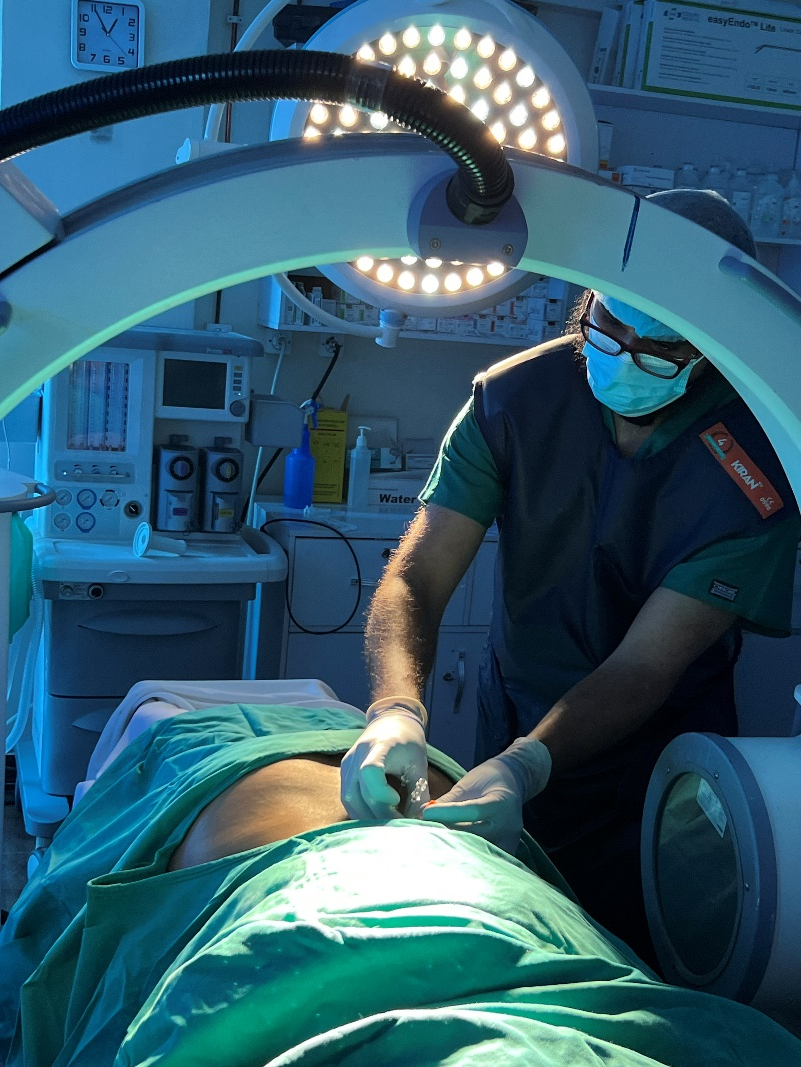
Some of the most common orthopedic procedures include:
- Fracture Repair: Surgical alignment and fixation of broken bones
- Joint Replacement: Replacing worn-out joints, such as:
- Hip Replacement
- Knee Replacement
- Shoulder Replacement
- Arthroscopy: Minimally invasive surgery using a camera to treat joint problems
- Spine Surgery: Procedures to treat slipped discs, scoliosis, or spinal fractures
- Ligament and Tendon Repair: Such as ACL reconstruction
- Correction of Deformities: For conditions like clubfoot or bowlegs
- Carpal Tunnel Release: For nerve compression in the wrist
Benefits of Orthopedic Surgery
- Pain Relief: Most patients experience significant reduction or complete relief from joint or bone pain.
- Restored Function: Surgery helps restore movement and strength in the affected area.
- Improved Quality of Life: Patients return to normal daily activities and hobbies.
- Better Mobility: Joint replacements can allow patients to walk and move more comfortably.
- Corrected Deformities: Surgery can straighten or realign bones and joints.
What are the risks of orthopedic surgery
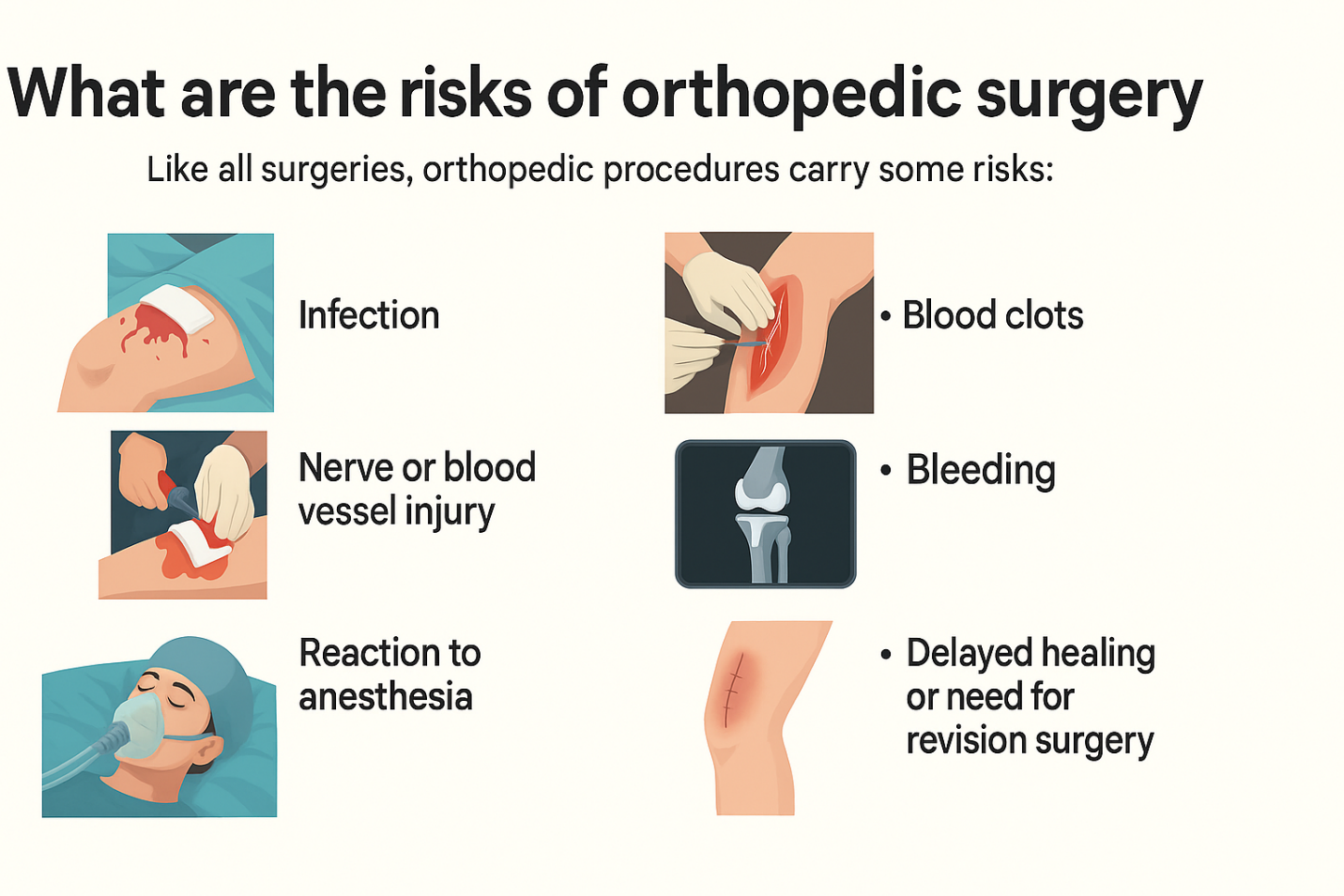
Like all surgeries, orthopedic procedures carry some risks:
- Infection
- Blood clots
- Nerve or blood vessel injury
- Bleeding
- Joint stiffness or implant failure (in joint replacement cases)
- Reaction to anesthesia
- Delayed healing or need for revision surgery
Your surgeon will discuss the risks specific to your condition and the procedure recommended.
How is Orthopedic Surgery Done?
The procedure depends on the condition being treated, but generally involves:
- Pre-op Evaluation: Tests such as X-rays, MRIs, or blood work
- Anesthesia: You may receive general, regional, or spinal anesthesia
- Surgical Procedure: This may involve opening the affected area, removing damaged tissues, and repairing or replacing structures
- Closing the Site: Incisions are closed with sutures or staples and covered with a sterile dressing
Some surgeries are minimally invasive (like arthroscopy), while others may require open approaches.
How to Prepare for Orthopedic Surgery
- Medical Evaluation: Your doctor may recommend tests to assess your overall health.
- Medication Review: Some medicines may need to be stopped temporarily.
- Fasting: Don’t eat or drink for 6–8 hours before surgery.
- Home Preparation: Arrange support for tasks like mobility, cooking, and wound care post-surgery.
- Consent: You will sign a form after your surgeon explains the procedure, benefits, and risks.
Recovery After Orthopedic Surgery
Recovery depends on the type of procedure, your age, and general health:
- Hospital Stay: Some surgeries require overnight stays; others are day-case.
- Pain Management: Medication will be given to help control pain.
- Physiotherapy: Early movement and guided exercises are vital to regain strength and flexibility.
- Mobility Aids: You may need crutches, walkers, or braces during healing.
- Follow-Up: You will attend appointments to monitor healing and progress.
Post-operative care at home
- Wound Care: Keep the surgical area clean and dry.
- Rest: Avoid heavy lifting or strenuous activity until advised.
- Medication: Take prescribed medications as directed.
- Physical Therapy: Attend all therapy sessions—it’s key to full recovery.
- Watch for Complications: Seek medical help if you experience:
- Fever or chills
- Increased pain or swelling
- Bleeding or pus from the wound
- Sudden shortness of breath or chest pain
At our hospital, we are committed to helping you move better, live better, and recover fully. For more information, speak with our orthopedic specialist.